Magnet Applications in Wind Power and Energy Systems

NEOLUNE MAGNETS makes magnetic components to drawings. Wind generators use permanent-magnet rotors for generation; energy-storage cooling and solar tracking use motor magnets for auxiliary drive tasks.

Generation and auxiliary drive roles

Direct-drive generation and rotor assembly describe the system and its internal structure. Storage cooling and solar tracking have distinct motor requirements.

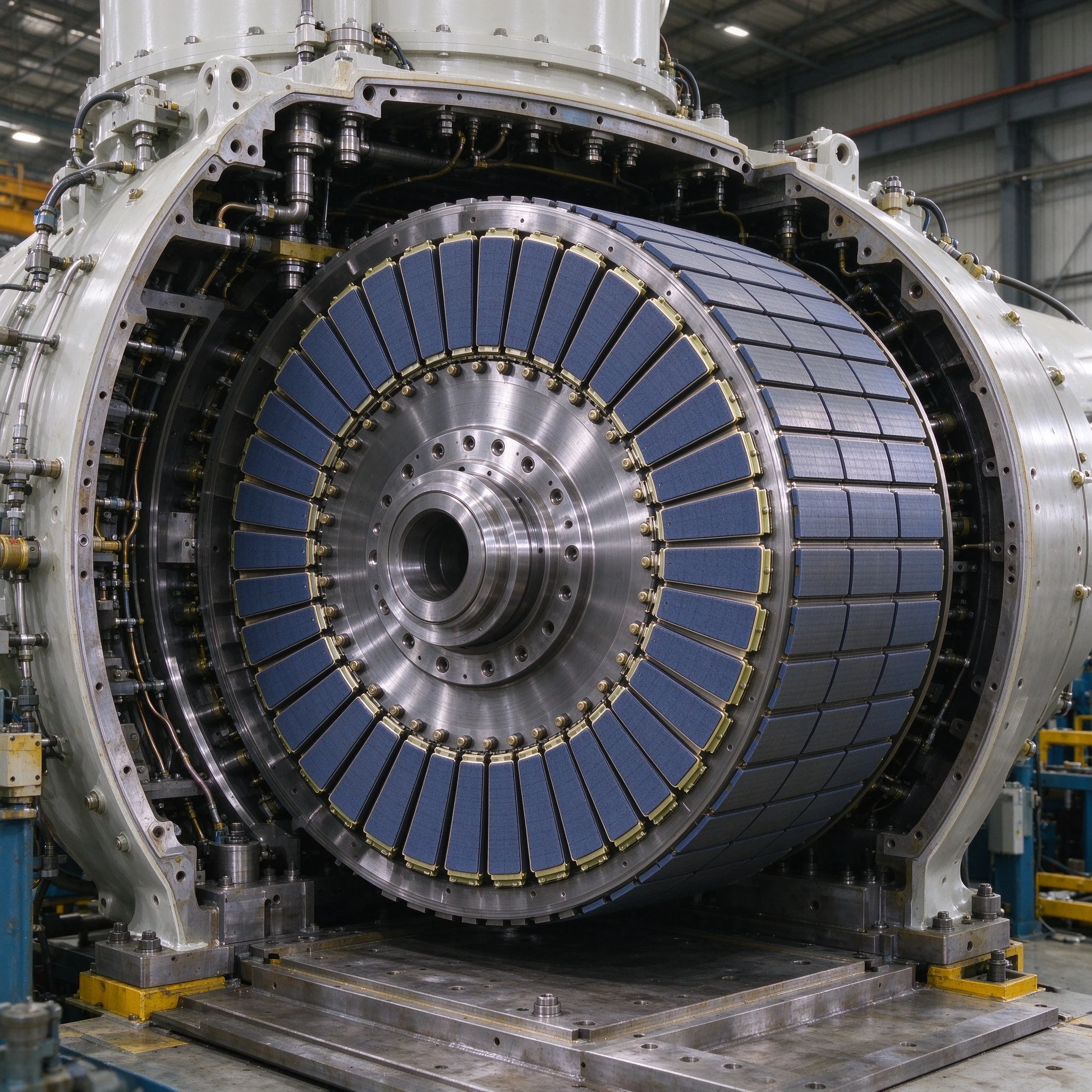
Conceptual illustration of a large permanent-magnet wind-generator rotor.

Direct-drive permanent-magnet wind generators

Equipment: Permanent-magnet direct-drive wind generators and wind-turbine main-drive systems.

Rotor magnet arrays interact with the stator windings during power generation. Removing a gearbox is a feature of the direct-drive system architecture.

Design goals: Efficient generation and a useful operating speed range.
Wind-generator magnet rotors

Equipment: Multipole magnet assembly within permanent-magnet wind-generator rotors.

Shaped magnets arranged around the rotor create the excitation field. Positioning, retention and protective surfaces are defined for the component and environment.

Design goals: Field uniformity and environmental protection.

Cooling motors for storage converters

Equipment: Storage-converter PCS cooling fans, battery-system cooling and storage containers.

Permanent-magnet motor rotors drive cooling fans serving the converter and battery system. The magnets form part of the cooling drive, while power conversion is a separate system function.

Design goals: Efficient, quiet cooling-drive operation.

Solar tracking drives

Equipment: Solar tracking supports, panel positioning and tracking-drive motors.

Permanent-magnet motors provide torque to turn the tracking mechanism. Position control and outdoor protection depend on the full drive and support system.

Design goals: Controlled positioning and outdoor operation.

Component families to review

Motor component forms and laminated segments provide starting points for layout review. Generator scale, retention and environmental requirements are assessed against the drawing.

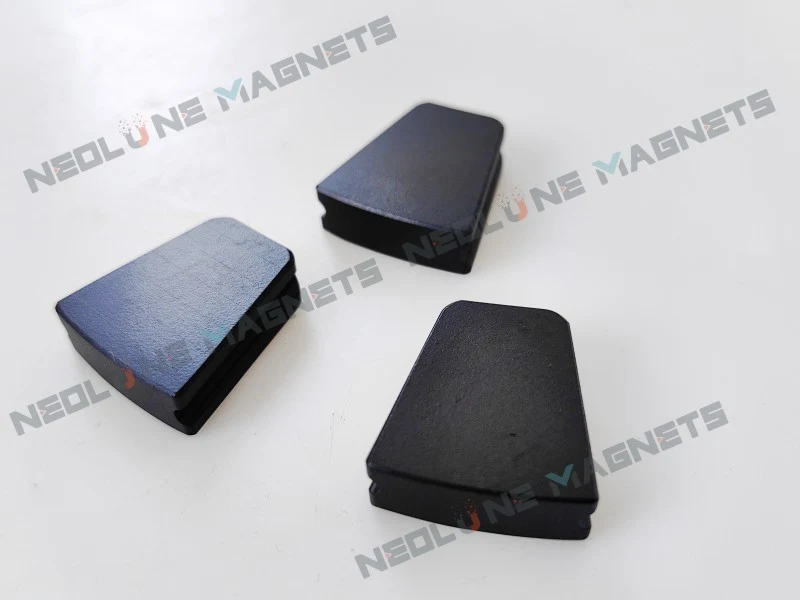
NEOLUNE rotor magnetic component examples with original watermarks.

Motor Magnetic Components

Rotary structures for reviewing magnet placement, shaft or carrier interfaces and the component assembly route.

View motor components
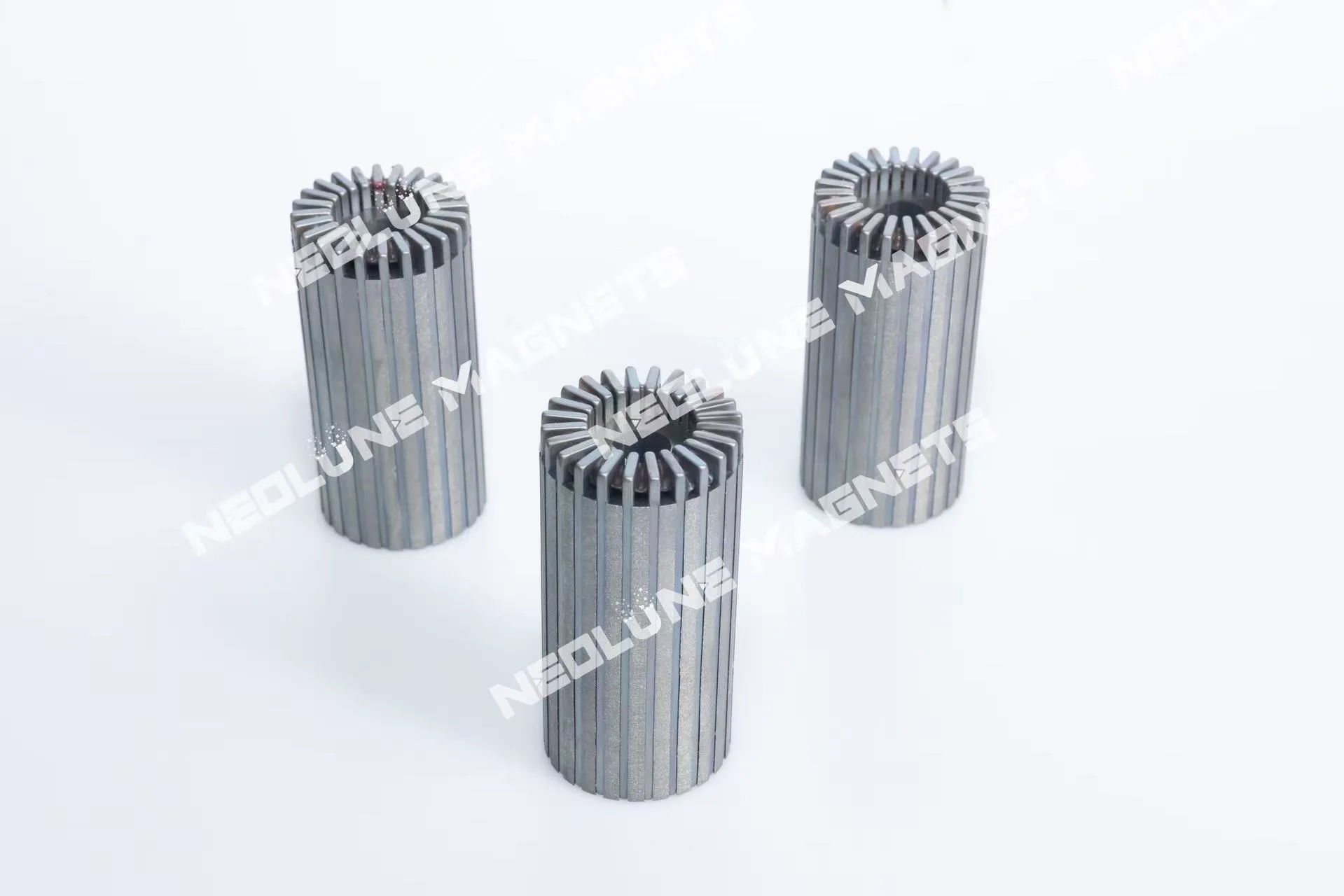
Original NEOLUNE laminated magnet examples with product watermarks.

Laminated Magnets

Insulated segments for suitable motor magnetic circuits. The drawing defines shape, segmentation and assembly conditions.

View laminated magnets

Energy-system project inputs

Identify whether the component supports generation, cooling or tracking. Environmental protection and inspection requirements are agreed for the actual component.

Prepare a requirement checklist
NEOLUNE laminated magnet examples for component and insulation discussion.
Function and duty
Generator excitation, converter or battery cooling, or solar tracking; include the intended duty cycle.
Drawing and retention
Magnet and rotor envelope, support interfaces, datums, assembly access and retention arrangement.
Magnetic circuit
Pole pattern, magnetisation direction, field target and working air gap; segmentation or insulation needs where relevant.
Outdoor and thermal conditions
Temperature, moisture, corrosion exposure and surrounding materials; protective coating and acceptance requirements.
Project acceptance and quantities
Critical checks, required records, prototype sets and production quantities; state any application qualification needs.

Engineering and related uses

Magnetic design and assembly

Review the component drawing, magnetic layout, positioning, bonding and curing route.

Project checks and reports

Define magnetic, dimensional and coating checks and the records required for the component.

Discuss your energy-system component

Share the generator or auxiliary-drive function, drawing or download link, environment and quantities. We review the proposed magnetic component, retention and assembly requirements.

Paid prototypes can start from one set. Sample schedule, production MOQ and delivery timing are confirmed against the design, tooling and order quantity.

Get a Quote

Drawings and specifications can also be sent by email.