Robotics Magnet Applications

NEOLUNE MAGNETS supplies drawing-based magnetic components for robot joints and precision mechanisms. Permanent-magnet arrays can contribute to drive, transmission, rotor support and position feedback, with the component layout reviewed for your system.

Magnetic roles in robots

Joint drives, magnetic couplings, bearing concepts and position-sensing components place different demands on the magnetic layout.

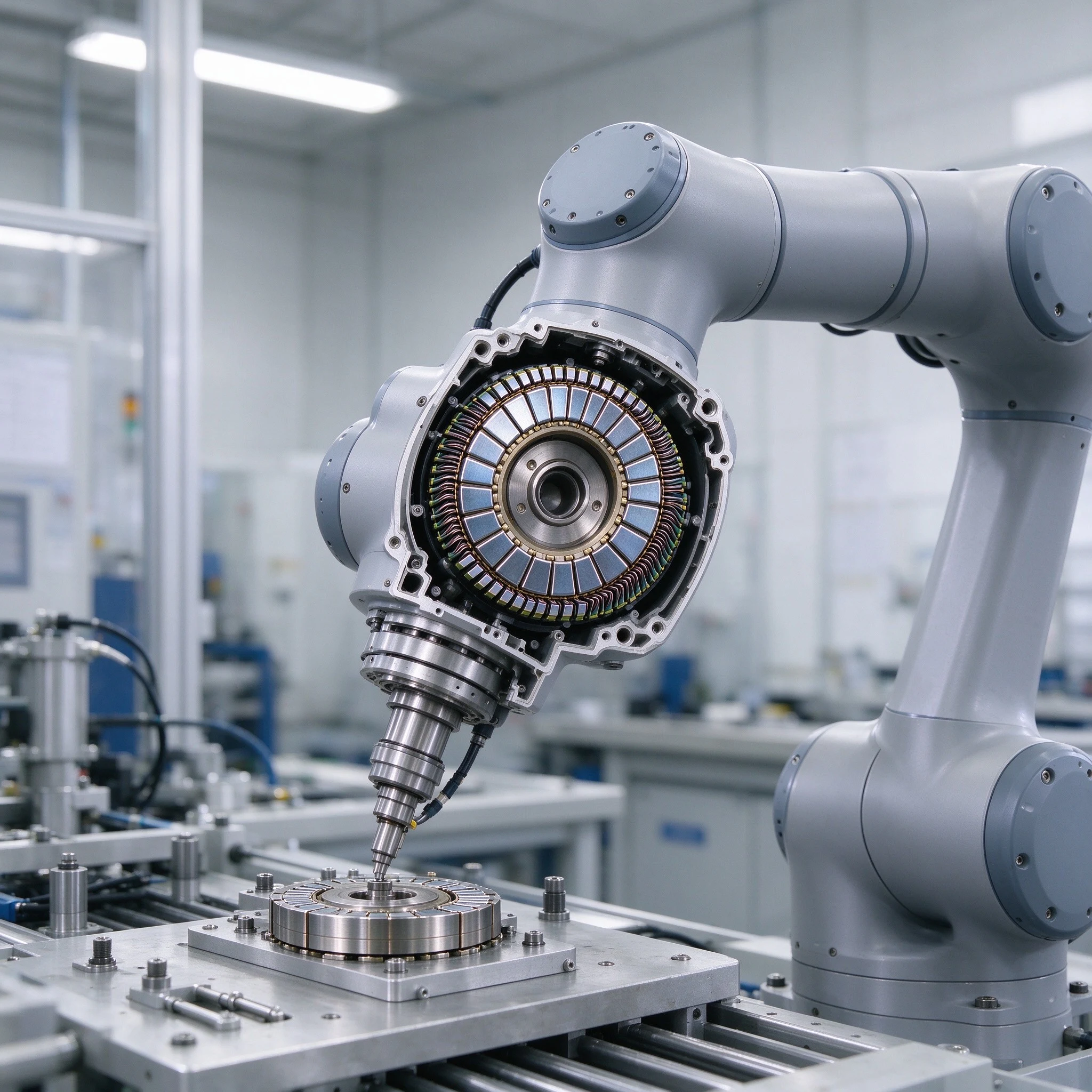
Conceptual illustration of a robot joint servo motor and its magnetic components; not a delivered NEOLUNE robot system.

Permanent-magnet joint servo motors

Equipment: Collaborative arms, six-axis industrial robots, SCARA robots and mobile-robot grippers.

Rotor magnets interact with the stator windings to produce joint drive torque. Halbach arrangements are one layout to assess against the motor design.

Design goals: Compact installation, high torque density and smooth joint motion.
Magnetic coupling transmission

Equipment: End effectors, vacuum-handling robots, chemical-transfer robots, underwater inspection and sealed-transfer manipulators.

Inner and outer magnetic rotors transfer torque without direct contact across a containment wall. Separation and overload slip depend on the coupling and barrier design.

Design goals: Isolated torque transfer and overload-slip behaviour.

Magnetic bearing concepts

Equipment: High-speed robotic grinding and machining spindles; clean semiconductor-handling rotors.

Permanent-magnet components can contribute support forces in suitable rotor-bearing architectures. Rotor stability, load capacity and auxiliary support must be reviewed as part of the complete system.

Design goals: Contactless support, reduced vibration and oil-free operation in suitable designs.

Position-sensing magnet components

Equipment: Joint feedback, AGV/AMR position sensing, limit detection and rotary encoder modules.

Magnet rings work with Hall sensors to provide angle or position signals for the controller. Pole layout, sensor spacing and signal requirements are defined together.

Design goals: Contactless position feedback for motion control.

Component families to review

3C arrays, motor components and Halbach assemblies offer different structures for drawing review. The required robot-system function determines the layout and interfaces.

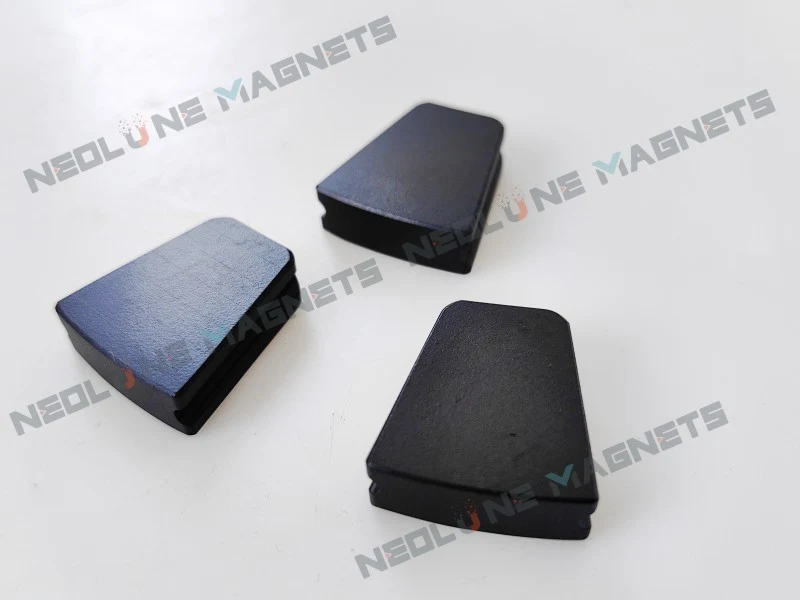
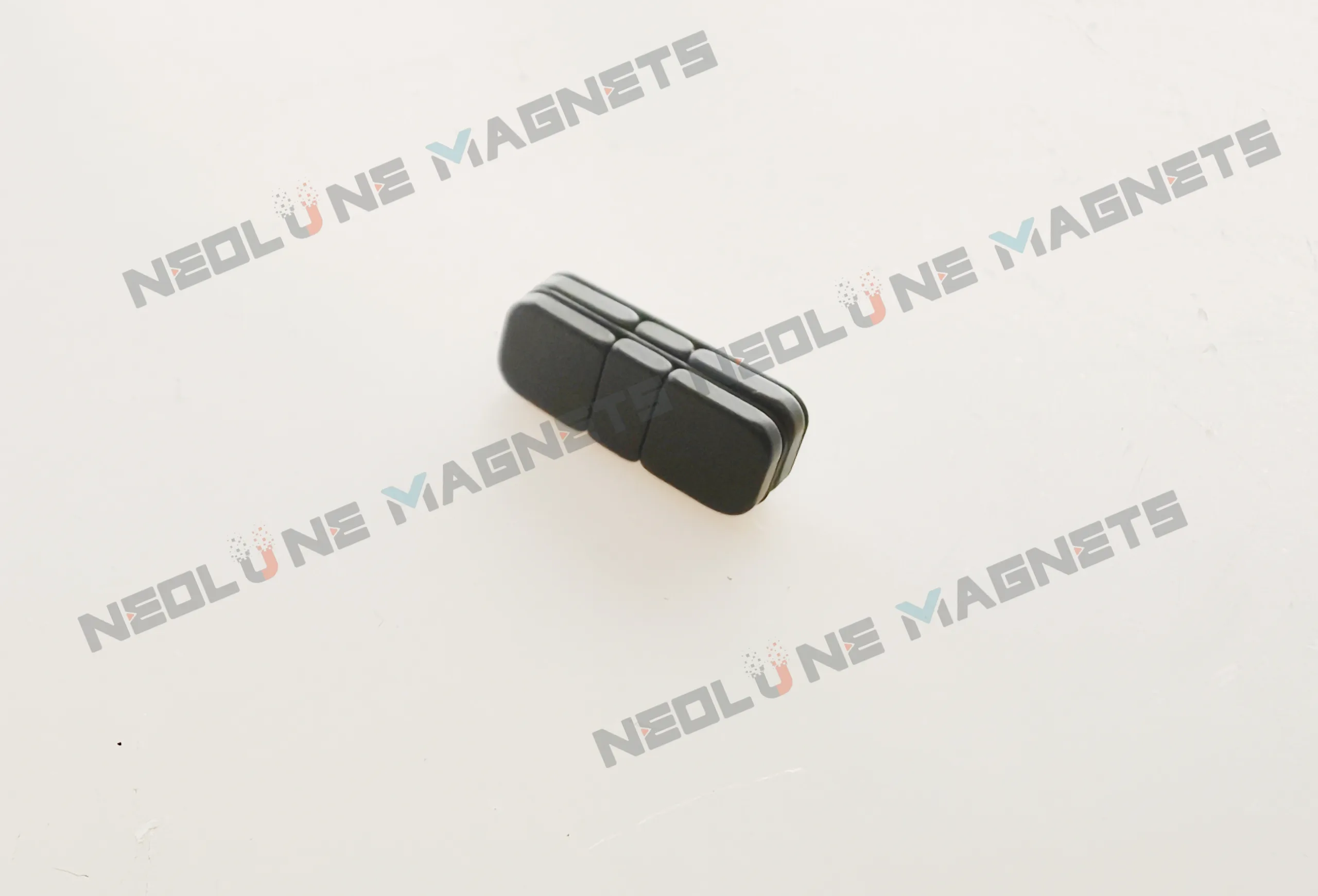
NEOLUNE compact 3C magnetic component product example with original watermark.

3C Magnetic Components

Compact arrays for 3C equipment and robot joints, with magnet arrangement, grade and coating configured to the agreed drawing.

View 3C components
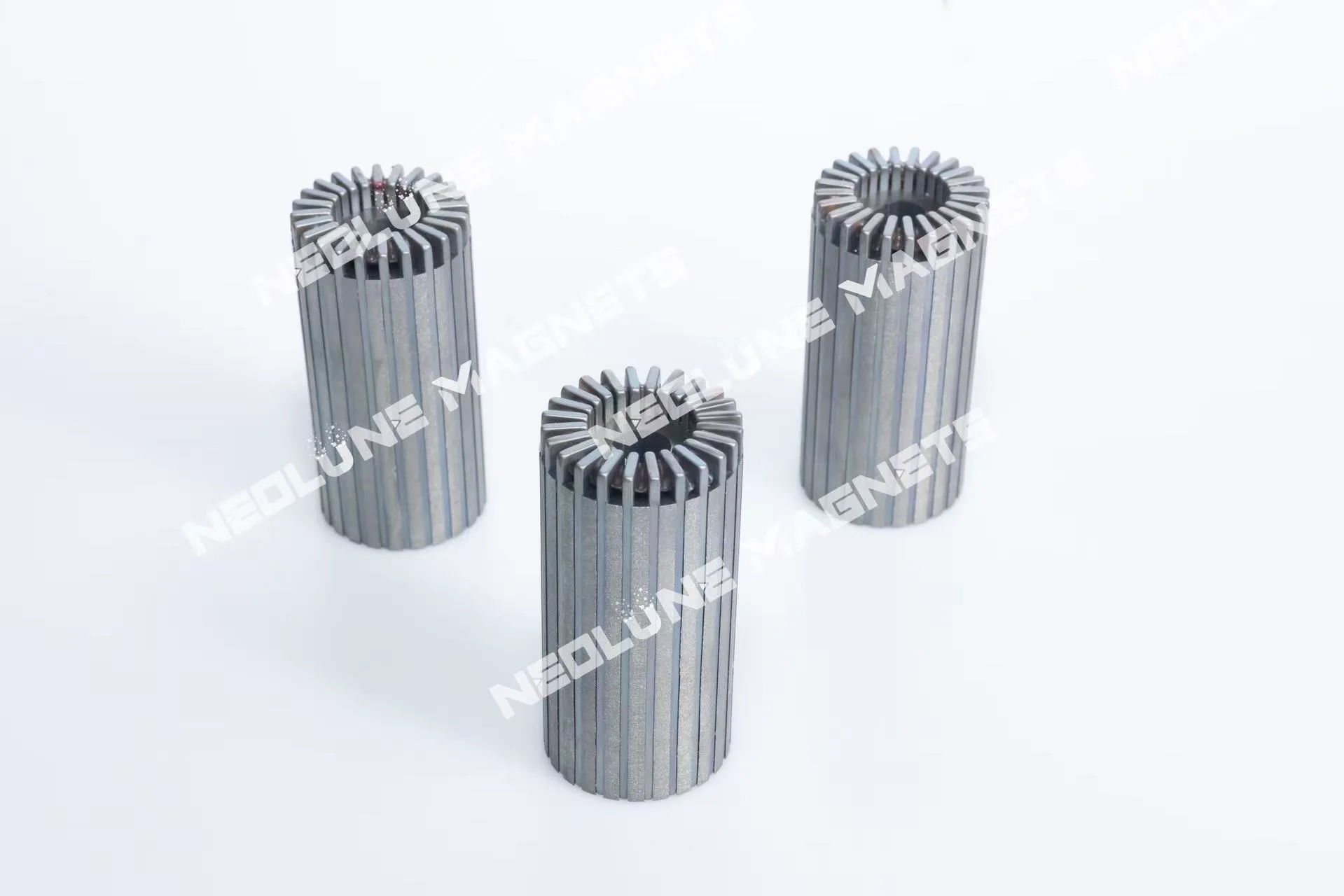
NEOLUNE cylindrical rotor magnetic component product examples with original watermarks.

Motor Magnetic Components

Rotary and linear forms, including radial permanent-magnet bearing components, for layout and installation-interface review.

View motor components
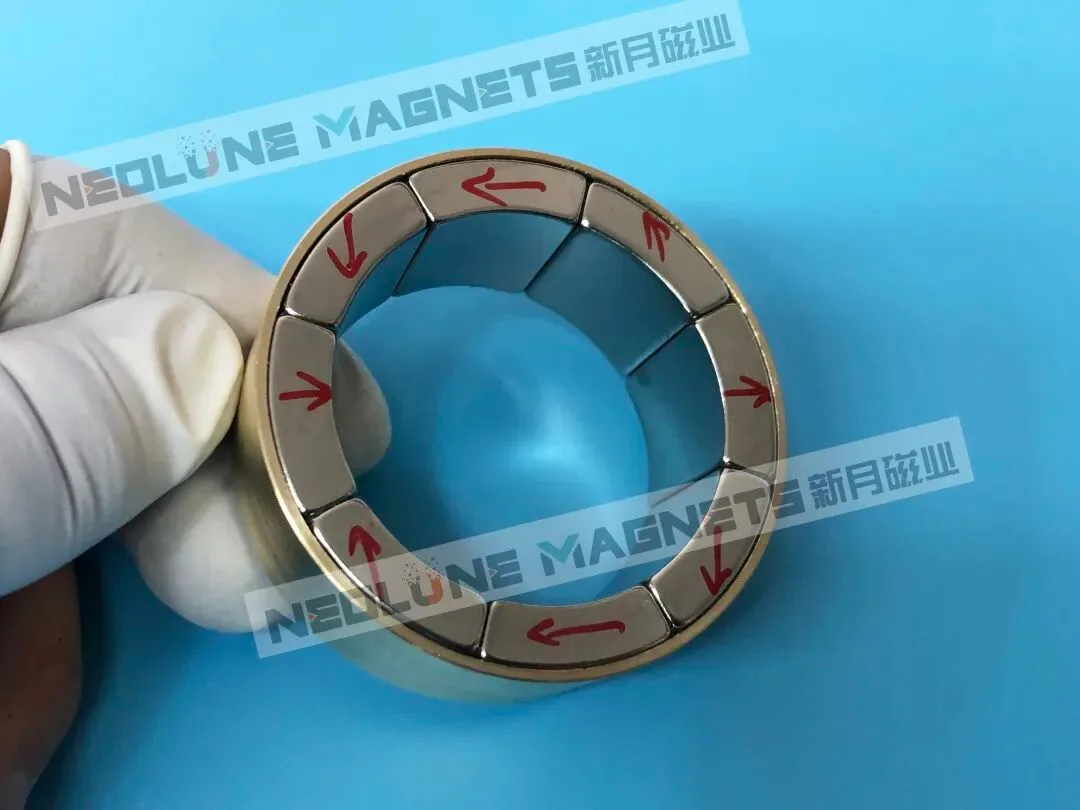
NEOLUNE ring Halbach assembly product example with magnetisation markings and original watermarks.

Halbach Assemblies

Ring, cylindrical, linear and arc arrays for magnetic-circuit review, where the working field and installation constraints call for a Halbach layout.

View Halbach assemblies

Robotics project inputs

The drawing review covers the component and its place in the robot. Mark undecided items for discussion rather than fixing them before the first enquiry.

Prepare a requirement checklist
Original NEOLUNE laminated magnet component examples with visible watermarks for magnetic assembly drawing review.
Function and location
Joint drive, coupling, spindle support or position feedback; identify the part within the mechanism.
Envelope and mating interfaces
Component dimensions, drawing datums, shaft, housing or carrier fit, and assembly access.
Magnetic layout and working gap
Pole arrangement, magnetisation direction, working field, air gap or containment-wall geometry; sensor spacing where relevant.
Operating conditions
Temperature, speed, torque or support-load targets and the surrounding environment. State these as system requirements.
Acceptance and quantities
Critical dimensional and magnetic checks, required records, prototype sets and expected production quantity.

Engineering and related uses

Magnetic design and assembly

Review the drawing-to-assembly route, including magnetic design, positioning, bonding and curing.

Project checks and reports

Agree inspection items, acceptance criteria, coverage and batch-record requirements for the selected component.

Discuss your robotics project

Share the mechanism, component drawing or download link, working conditions and expected quantities. We review the magnetic layout, material and assembly requirements with your installation interfaces.

Paid prototypes can start from one set. Sample schedule, production MOQ and delivery timing are confirmed against the design, tooling and order quantity.

Get a Quote

Drawings and specifications can also be sent by email.